PaidTerms Navbar – Industries Flyout
Back to industries

Buy Now Pay Later for Food & Beverage Manufacturers

We help food and beverage businesses offer instalments, so buyers can spread costs while you get paid upfront with less risk and admin.


Food and beverage manufacturing
Increase order value
Get paid faster
Get paid faster
Discount less
Discount less

Why Food & Beverage Manufacturers Use Instalments

Enable larger ingredient and production orders while protecting your cash flow and eliminating credit risk.

Larger bulk orders

Buyers commit to bigger ingredient and product runs when they can spread costs over time

Seasonal cash pressure

Producers need to stock up ahead of peak seasons without depleting working capital

Long payment terms

Standard 30–60 day terms create cash flow gaps that limit growth and reordering

Competitive advantage

Win more supply contracts by offering flexible payment options competitors don't

How it works

Get set up in minutes and start offering instalments on your next invoice.

We give you a designated payment link to send to customers. Add it to your invoice email and let the buyer choose terms.
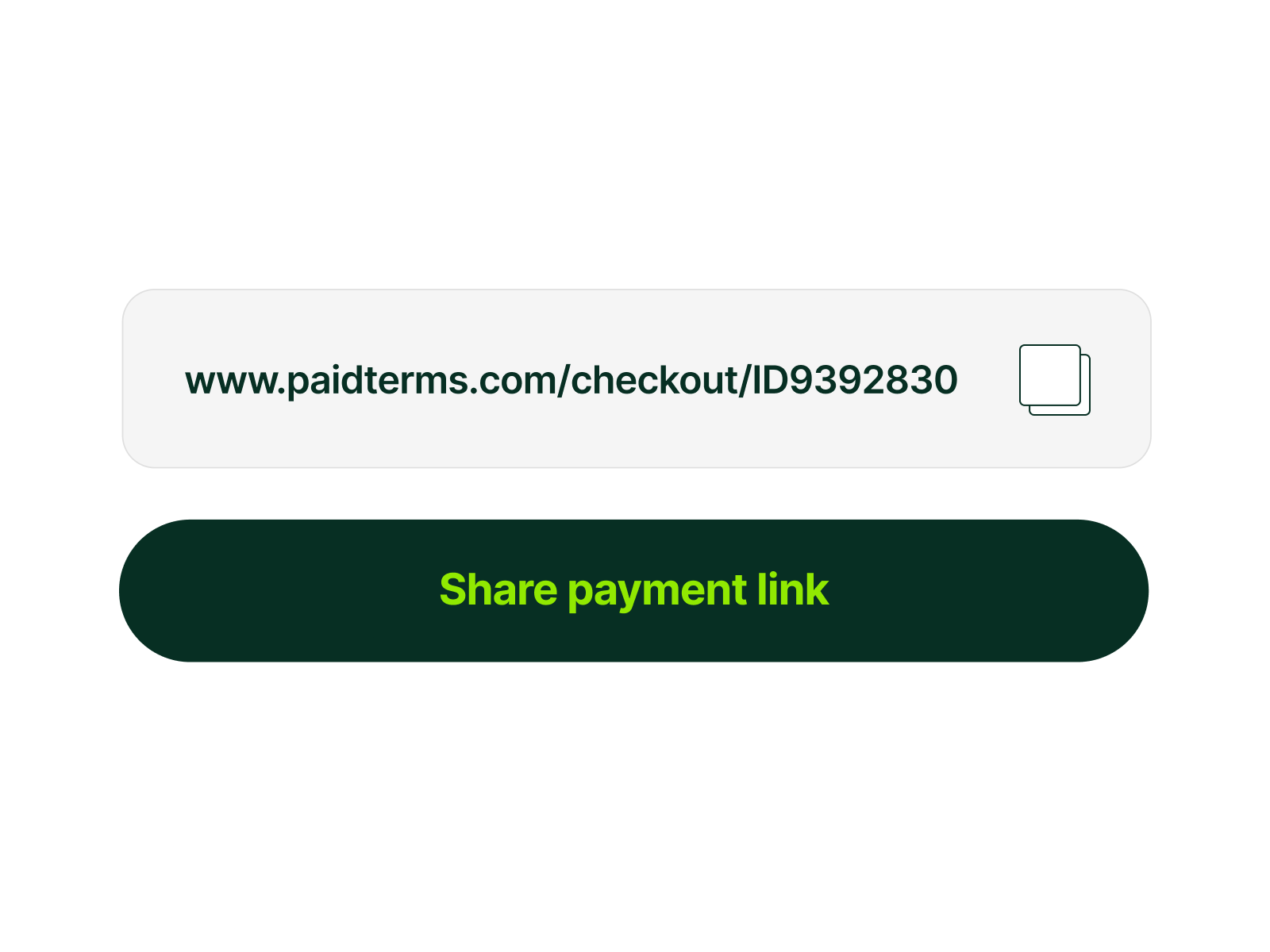
Send payment link

Your customer can split the invoice into 3, 6, 9, or 12 monthly instalments at checkout.
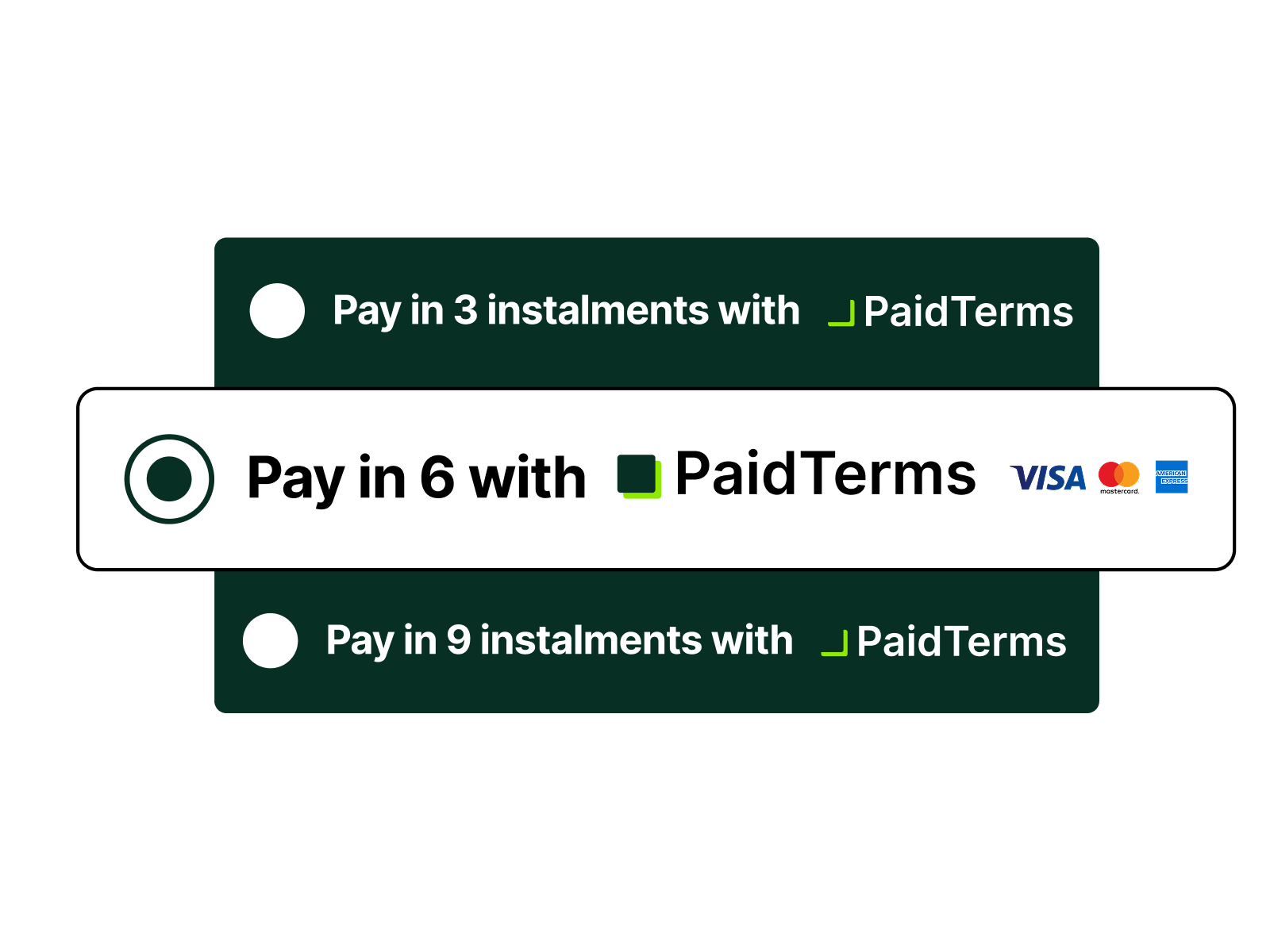
Customer chooses terms

PaidTerms runs a quick business check using NZBN and Centrix to confirm the buyer's details and approve the transaction.
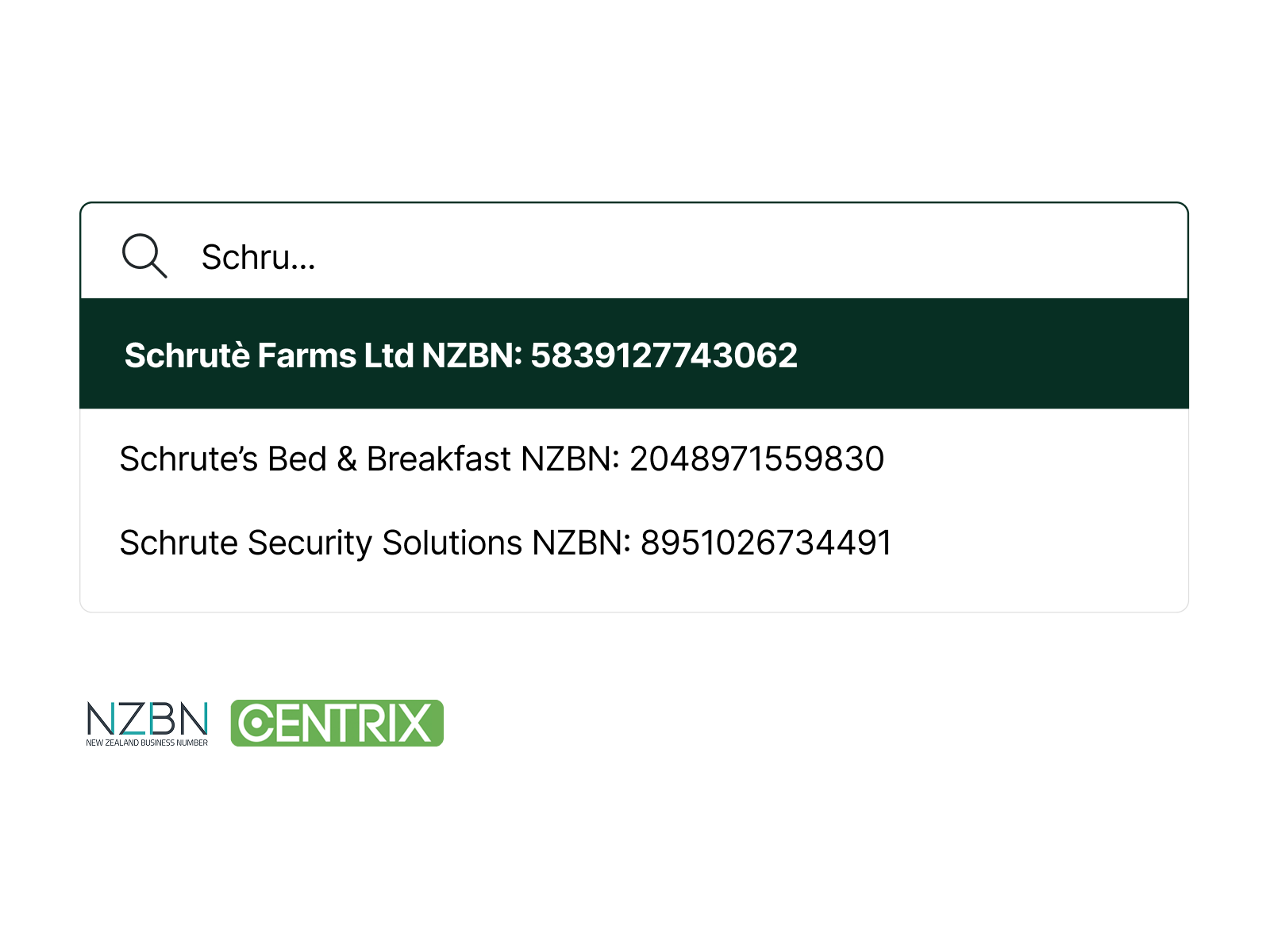
We verify the buyer instantly

You receive the full invoice amount upfront, and your customer pays it off in instalments through PaidTerms.
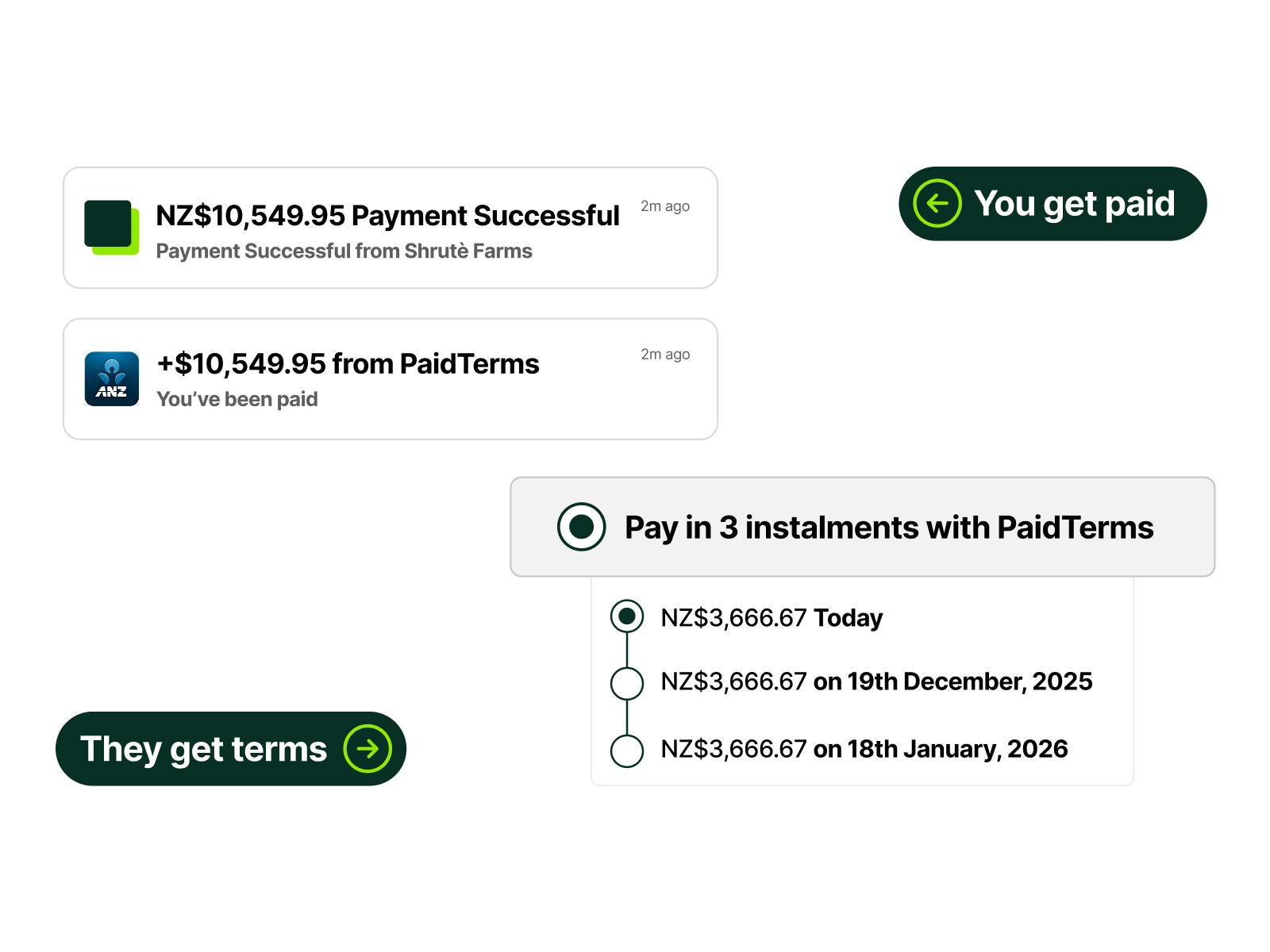
You get paid, they get terms

Example: Food & Beverage Order Using Instalments

See how the same scenario plays out differently

The Scenario

Buyer Type

Beverage brand scaling up ahead of peak summer demand

Order Size Needed

$38,000 for full ingredient and packaging run

Traditional Outcome
  • Buyer splits order into smaller monthly batches
  • Higher per-unit costs from smaller runs
  • Stock runs out mid-season, missing peak sales
  • Supplier loses revenue to a more flexible competitor
With PaidTerms
  • Buyer commits to full $38,000 order upfront
  • Pays in manageable instalments across the season
  • Supplier receives $38,000 upfront
  • Brand is fully stocked and ready for peak demand

FAQ for Food & Beverage Manufacturers Using B2B BNPL

What is B2B Buy Now, Pay Later (BNPL) for Food & Beverage manufacturers, and how does it work?

B2B BNPL allows your wholesale customers—such as distributors, retailers, hospitality groups, or supermarkets—to split large product orders into instalments (typically 3, 6, or 9 months) while you get paid upfront and in full.

Can Food & Beverage manufacturers offer instalments on bulk orders, seasonal production runs, and new product launches?

Yes. B2B BNPL is well suited to high-volume wholesale orders, seasonal inventory builds, new product launches, private label production, and distributor onboarding. It enables buyers to secure stock and commit to larger orders without paying the full amount upfront, helping manufacturers increase order size while maintaining margin integrity.

Do Food & Beverage manufacturers get paid upfront if customers pay in instalments?

Yes. In a B2B BNPL model, the manufacturer is paid upfront and in full once the transaction is approved. The customer then repays the BNPL provider over time. This structure improves cash flow, reduces debtor days, removes receivables from your balance sheet, and lowers exposure to slow-paying trade accounts.

Is B2B BNPL safe for Food & Beverage manufacturers, and who takes the risk if the buyer doesn’t pay?

B2B BNPL is designed to reduce credit risk for manufacturers. The BNPL provider assesses the buyer and manages repayment collections. While terms vary by provider, repayment risk is typically held by the BNPL provider rather than the manufacturer. This means you are not responsible for chasing overdue invoices or absorbing bad debts.

How does B2B BNPL help Food & Beverage manufacturers increase order value and win more contracts?

When buyers can spread payments over time, they are more likely to commit to larger orders, trial new product lines, and proceed with seasonal stock builds. Payment flexibility reduces price pressure and shortens sales cycles by removing upfront capital barriers. Instead of discounting to secure volume, manufacturers can use flexible payment terms as a strategic advantage to increase average order value and improve conversion rates.